Bali 1928 Archives: Unearthing the Past for a Creative Future
“Restoration, Dissemination, and Repatriation of the Earliest Music Recordings and Films in Bali” is the best-conceived project for making audio and visual recordings available in the country of their origin that I know about. It is an elaborate and extremely stimulating example of what scholars call “repatriation”, the return of materials held in archives and museums to their home communities.” ~ Anthony Seeger
Pemugaran, Penyebaran, dan Pemulangan Kembali Rekaman Musik dan Film Terawal di Bali adalah upaya terbaik sepanjang pengetahuan saya dalam upaya menyediakan kembali rekaman-rekaman musik tradisional dan film ke negara asalnya. Kolaborasi ini merupakan contoh yang lengkap dan sangat menggairahkan akan usaha yang sering disebut-sebut oleh kelompok terpelajar sebagai “repatriasi” atau pemulangan kembali materi-materi yang tersimpan di pusat-pusat arsip dan museum-museum ke komunitas-komunitas aslinya.” ~ Anthony Seeger
Anthony Seeger adalah penulis dari Why Suyá Sing: A Musical Anthropology of an Amazonian People, Cambridge University Press, 1987 dan co-editor dari Early Field Recordings: A Catalogue of the Cylinder Collections at the Indiana University Archives of Traditional Music. Banyak karya tulisnya berfokuskan pada keterhubungan isu-isu kebangsaan, kebudayaan, hak asasi manusia, serta kenyataan dan tantangan dalam pengarsipan dan kekayaan intelektual. Seeger adalah Produser Eksekutif semua rekaman yang dikeluarkan pada label Smithsonian Folkways antara 1988 dan 2000, total sekitar 250 rekaman.
What is Bali 1928 Archives?
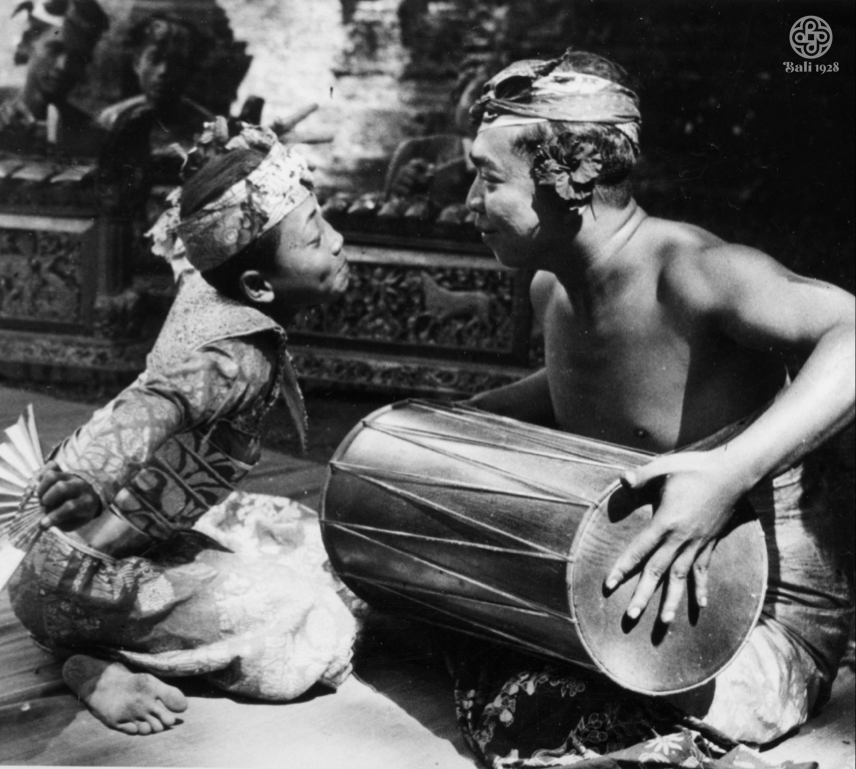
Bali 1928 is an ongoing research, dissemination, digitisation, and repatriation project dedicated to historical documents and recordings of Bali from the late 1920s and 1930s. Led by ethnomusicologist Edward Herbst, Marlowe Bandem, and Allan Evans (Arbiter of Cultural Traditions), in collaboration with various institutions and archives around the world, the project centres on the very first commercial recordings made in Bali by the German labels Odeon and Beka in 1928–29. It also encompasses related films and photographs created by scholars, artists, and storytellers who visited Bali during the 1930s.
Simply put, Bali 1928 is not just an archive; it is an evolving relationship between historical media and present-day Balinese communities.
Beyond serving as raw material for cataloguing and research, the Bali 1928 archive, and its repatriation efforts, actively contributes to the ongoing evolution of Balinese culture. Among its 111 aural recordings are revolutionary examples of gong kebyar and tembang (vocal music) that had, in many cases, fallen out of circulation. Through access to these materials, contemporary musicians can listen closely to pre-war tunings, phrasing, ornamentation, and compositional structures, and then adapt or reinterpret them within current performance practices. What once risked being lost now becomes a living reference.
These materials also create powerful opportunities for intergenerational dialogue. Through the popular Cinema Bali 1928 program, when recordings and films are brought and played in the villages where they were originally made, descendants are able to see and hear the artistry of their grandparents and great-grandparents. Such encounters often spark stories, corrections to established historical narratives, and renewed pride in local styles. This, in turn, informs how younger groups choose to compose, costume, and stage performances today, grounding contemporary creativity in remembered lineages rather than abstract “tradition”.
Repatriation also shifts power over the archive itself. Materials that once resided exclusively in European and American institutions are now increasingly accessible in Bali, allowing curators, educators, and village communities to interpret and use them on their own terms. Instead of being treated only as objects of foreign scholarship, these recordings and images become tools for local reflection, pedagogy, and cultural strategy.
At the same time, the archive functions as fuel for new creativity. The restored media do not freeze culture in the year 1930; instead, they become catalysts for new compositions, dance reconstructions, films, theatrical works, museum installations, and digital projects. By returning and re-contextualising these materials, Bali 1928 pushes Balinese culture forward, demonstrating that looking back can be a way of opening new aesthetic and intellectual paths rather than merely preserving a fixed past. In this sense, repatriation is both healing—repairing some of the fractures and displacements of colonial collecting—and generative, offering new ground for experimentation and imagination.
For those who wish to engage more directly with the archive or its repatriation activities, personal access and further information can be arranged by contacting Marlowe Bandem at marlowe[at]marlowebandem.com.